

Apex Gutter Works: Drip Edge Replacement in Apex, NC
Apex Gutter Works: Drip Edge Installation and Replacement in Apex, NC
Apex Gutter Works provides professional drip edge replacement in Apex, NC, designed to protect your home from water damage and support proper roof drainage. With over 15 years of experience, we ensure gutters and drip edges are precisely installed to promote effective water flow and long-term durability. Each system is custom-fit on-site and built to handle the heavy rain and storm conditions common in this area, giving homeowners lasting peace of mind.
As a fully licensed and insured local company, we take pride in clean, professional job sites with no mess left behind. Our approach is centered on honest recommendations, clear communication, and no unnecessary upselling. With a 20-year warranty, fast scheduling, and efficient project completion, you can count on quality and reliability every step of the way.
Why Choose Apex Gutter Works in Apex, NC:
15+ Years Serving Apex & the Triangle.
Seamless Gutters, Custom-Fit On-Site.
Licensed, Insured, Bonded & Workers' Comp Covered.
Clear Pricing, Flexible Financing & Reliable Scheduling.
Backed by a 20-Year Warranty.
Professional Drip Edge Installation for Better Roof Drainage
As rainwater runs down the roof, it must transition cleanly from the roofing surface into the gutter system. Without properly installed roof-edge flashing, water can follow the underside of the shingles, reach exposed wood, or run between the roof and gutters.
Drip edge installation creates a protective transition at the roof perimeter. When properly selected, positioned, and integrated with the gutter system, drip edge helps control runoff and protects the materials beneath and behind the roof edge.
At Apex Gutter Works, we evaluate the entire roof-to-gutter transition rather than treating each component separately. This allows us to identify whether the problem involves the drip edge, gutter position, fascia, gutter apron, or a combination of issues.
What Is Drip Edge?
Drip edge is a protective piece of flashing installed along the perimeter of a roof, typically at the eaves and rake edges. It is commonly made from aluminum, galvanized steel, or copper and is formed with a projecting edge that helps direct water away from the roof deck and fascia.
At the eaves, where gutters are typically installed, drip edge plays an important role in managing the transition between the roof and gutter system. Its shape helps prevent water from clinging to the roof edge and traveling back toward vulnerable wood components.
Drip edge can help :
Direct roof runoff away from the roof edge
Help guide water toward the gutter system
Protect the edges of the roof decking
Reduce moisture exposure to fascia boards and soffits
Help prevent water from getting beneath roofing materials
Provide a cleaner, more finished roof edge
Protect vulnerable gaps along the roof perimeter
Although drip edge is a relatively small component, improper installation or missing sections can contribute to significant moisture problems over time.
Why Drip Edge Is Important for Homes in Apex, NC
Homes in Apex experience periods of heavy rainfall, thunderstorms, wind-driven rain, and changing seasonal conditions. During intense rain, large amounts of water can move across the roof in a short period of time, making proper roof-edge drainage especially important.
If water is not directed cleanly from the roof into the gutters, it may run behind the gutter system, repeatedly wet the fascia, stain soffits, or contribute to deterioration along the roof edge. Over time, recurring moisture exposure can lead to peeling paint, wood rot, mold or mildew growth, and more extensive repairs.
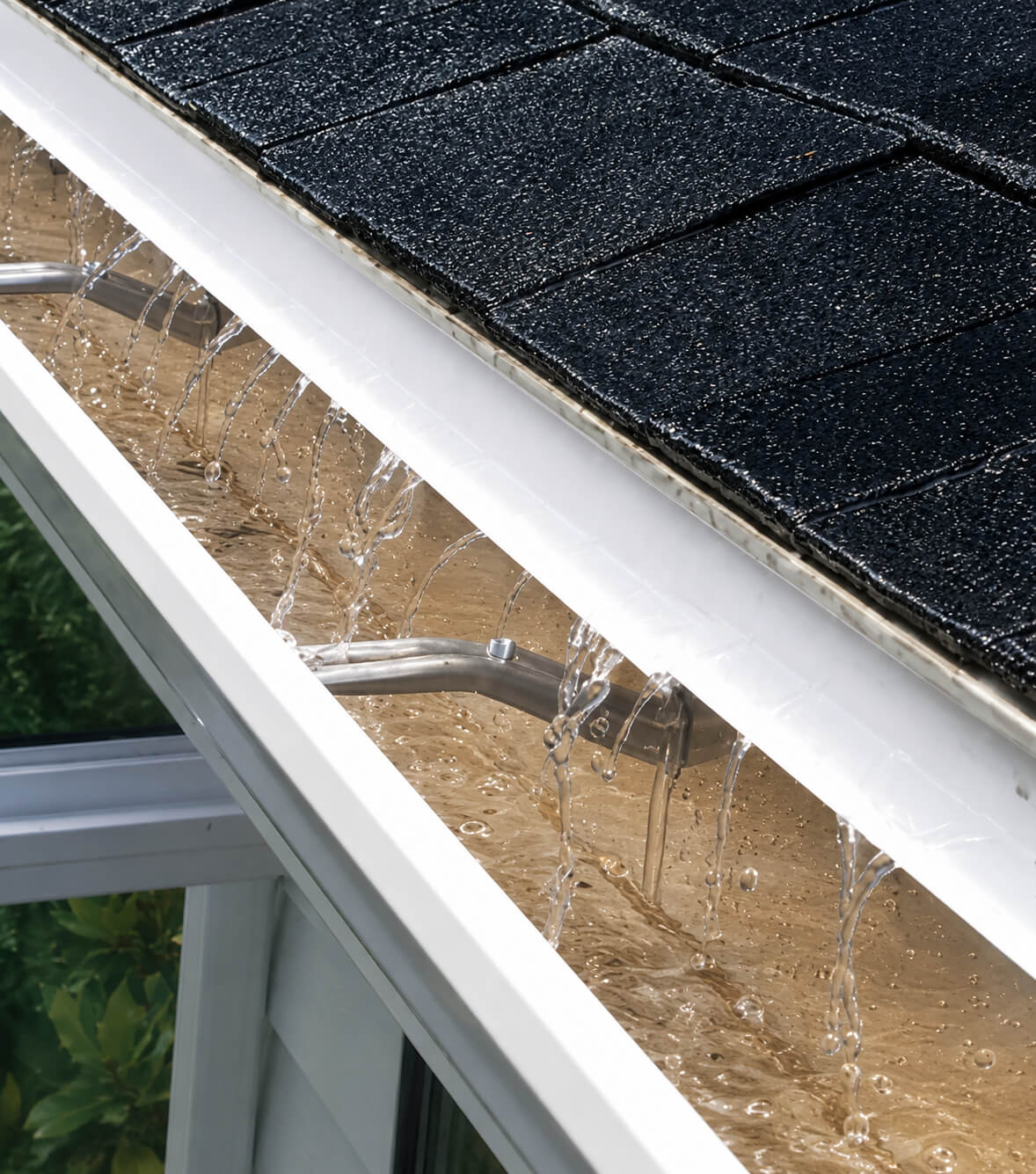
Properly installed drip edge provides an additional layer of protection at this vulnerable transition point and helps the roof and gutter system work together more effectively.
How Drip Edge Works With Your Gutter System
Drip edge and gutters perform different jobs, but they must work together. The drip edge helps control water as it leaves the roof, while the gutters collect that runoff and carry it toward the downspouts.
Problems can occur when there is too much space between the roof edge and gutter, the gutter is mounted too low, the flashing is too short, or the existing roof-edge components are improperly configured. In these situations, water may bypass the gutter or run behind it instead of entering the trough.
Common roof-to-gutter drainage problems include:
Water dripping between the fascia and gutter
Water stains behind the gutter system
Rotting fascia boards
Overflow despite clean gutters
Gaps between the roof edge and gutter
Drip edge that does not extend far enough to direct runoff properly
Gutters positioned incorrectly beneath the roofline
Our team inspects the entire transition to determine what is actually causing water leaking behind gutters. Depending on the home's construction, the correct solution may involve drip edge replacement, gutter apron flashing, gutter repositioning, fascia repair, or a combination of services.
Drip Edge vs. Gutter Apron: What's the Difference?
Gutter Apron
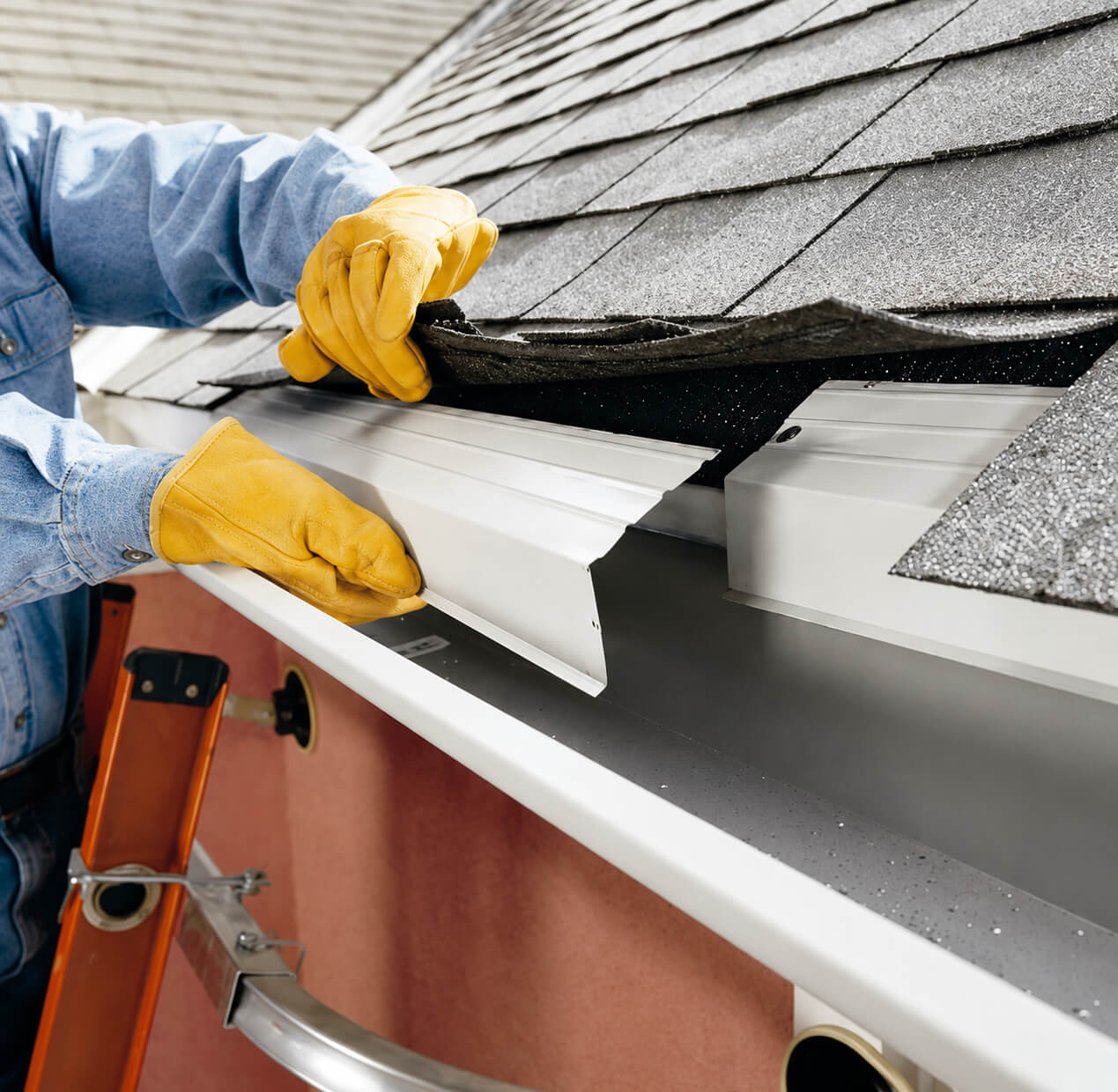
Gutter apron is a wider style of flashing designed specifically for the roof-to-gutter transition. Its longer lower section can help bridge a larger gap and direct water more effectively into the gutter when standard drip edge does not provide sufficient coverage.
Gutter apron flashing typically consists of durable materials like galvanized steel or aluminum and is shaped to direct water flow efficiently. Proper installation of gutter apron flashing is crucial for maintaining a watertight seal between the roof and gutter system, ensuring that water is controlled and directed away from the building structure.
Drip Edge
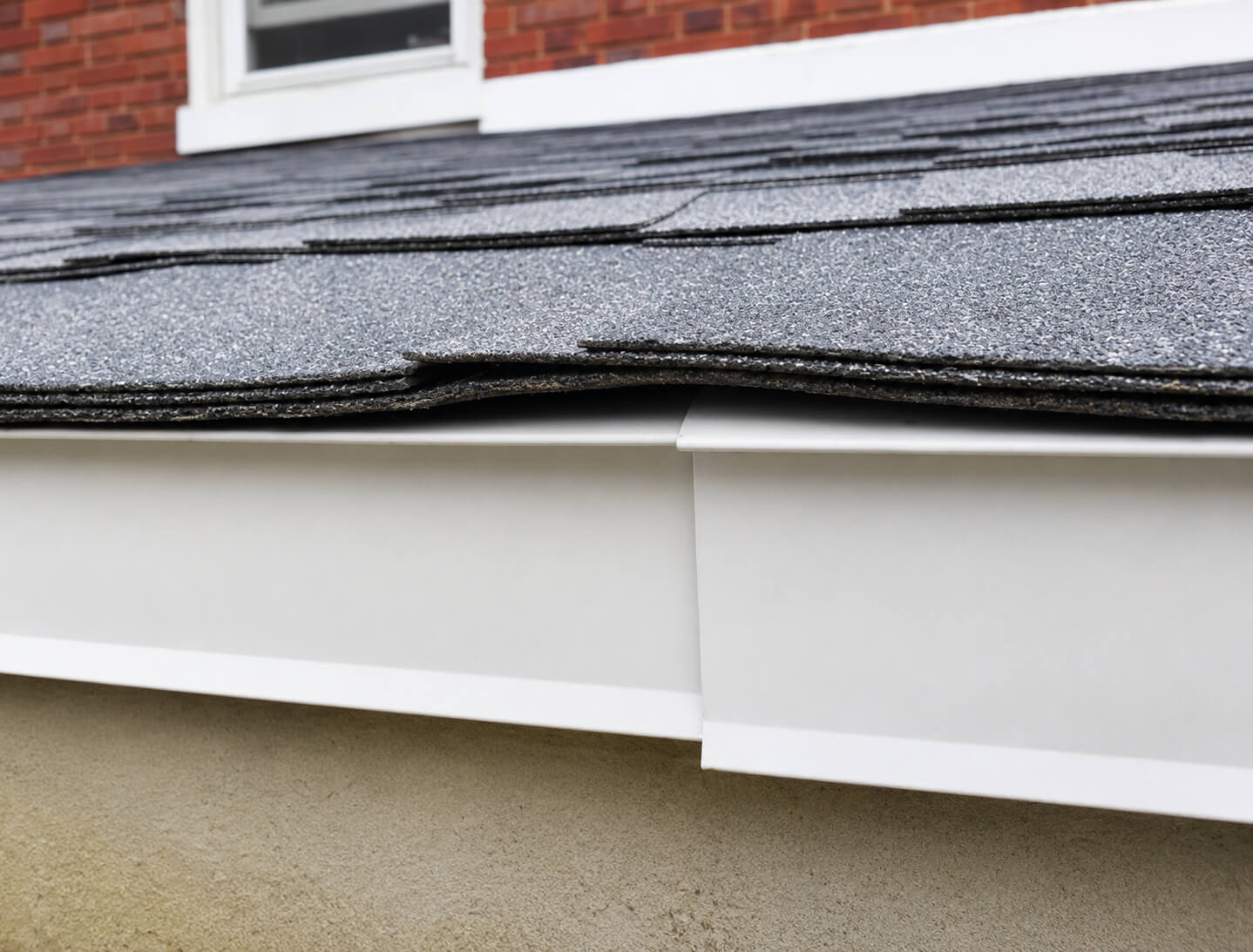
Drip edge flashing is installed along the edges of a roof to direct rainwater away from the roof deck and fascia and into the gutter system. Commonly installed at both the eaves and rake edges, it serves as a critical barrier that helps prevent water from seeping beneath shingles or running behind the gutters. It is available in several profiles to accommodate different roofing systems and is often installed or replaced during roof replacement projects to maintain the long-term performance of both the roof and gutter system.
Drip edge flashing is installed along the edges of a roof to direct rainwater away from the roof deck and fascia and into the gutter system. Commonly installed at both the eaves and rake edges, it serves as a critical barrier that helps prevent water from seeping beneath shingles or running behind the gutters. It is available in several profiles to accommodate different roofing systems and is often installed or replaced during roof replacement projects to maintain the long-term performance of both the roof and gutter system.
Signs You May Need Drip Edge Installation or Replacement
Drip edge can become damaged, corroded, loose, or ineffective over time. Some homes may also have missing or improperly installed roof-edge flashing.
Signs that your drip edge may need attention include:
Water running behind the gutters
Rotting or deteriorating fascia boards
Peeling or bubbling paint along the roofline
Water stains on fascia or soffits
Rusted or corroded flashing
Bent, loose, or damaged sections
Missing sections along the roof edge
Visible gaps between the roof and gutter
Water dripping between the gutter and fascia
Exposed roof decking at the roof edge
Because similar symptoms can also be caused by gutter installation problems, damaged fascia, or inadequate flashing coverage, a professional inspection can help identify the actual source before repairs begin.
Drip Edge Materials
Choosing the right material can affect durability, corrosion resistance, appearance, and compatibility with other exterior components.
Aluminum
Aluminum is one of the most common options for residential drip edge. It is lightweight, corrosion-resistant, cost-effective, and available in a variety of factory-finished colors to coordinate with roofing, fascia, and gutters.
Galvanized Steel
Galvanized steel provides additional strength and impact resistance. Its protective zinc coating helps resist corrosion, making it a durable option for demanding exterior applications.
Copper
Copper is a premium architectural option known for its durability and distinctive appearance. It naturally develops a patina over time and can pair especially well with copper gutters and other high-end exterior details.
Material selection should also consider compatibility with nearby metals and the existing roof and gutter system.
Types of Drip Edge Profiles
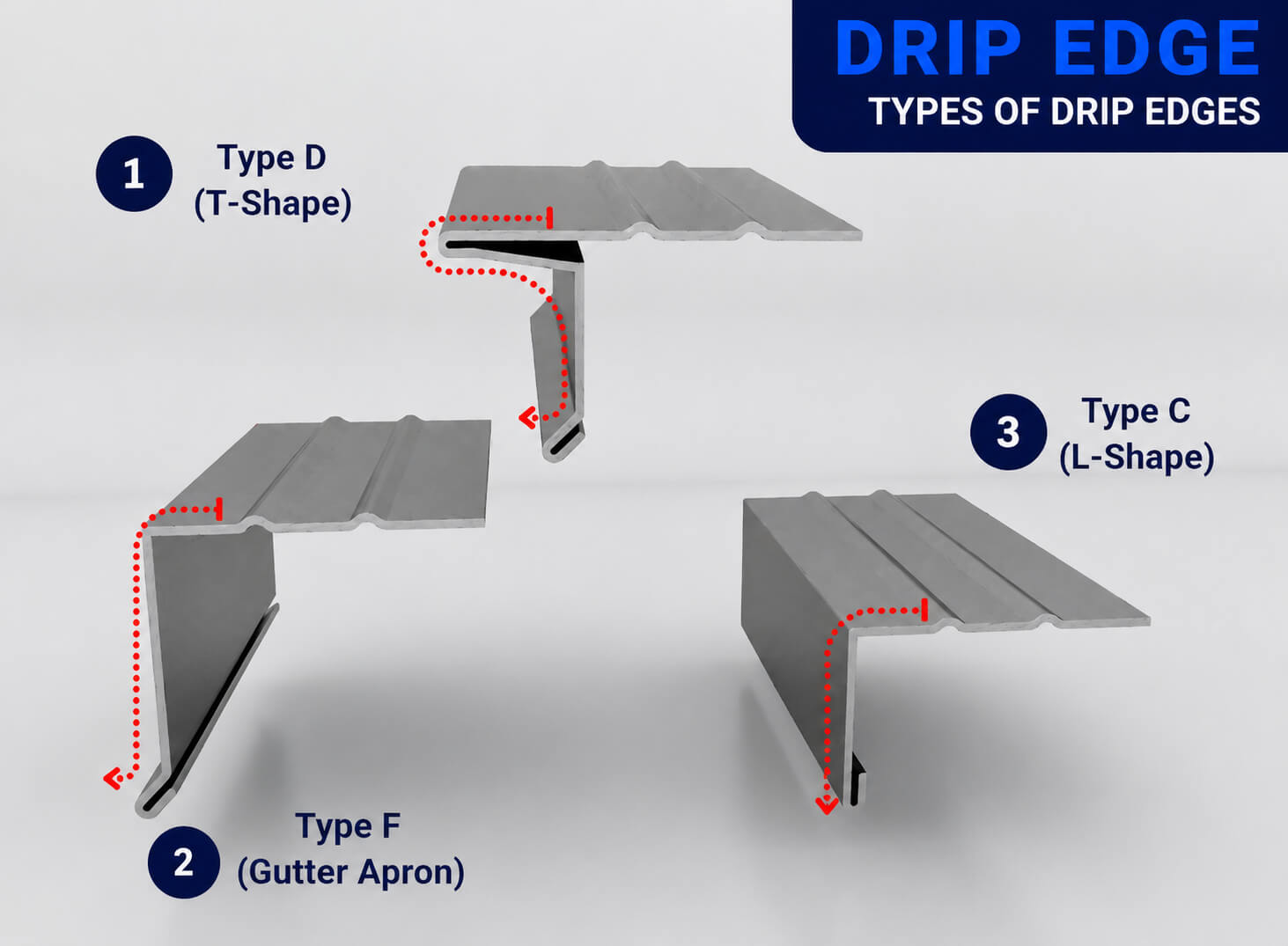
Type C or L-Style
This basic profile features a simple angled shape that covers the roof edge and directs water away from the fascia.
Type D or T-Style
This profile has a more pronounced projection that helps move water farther away from the roof edge before it drops.
Type F or Gutter Apron
Often referred to as a gutter apron, this profile typically has a longer flange and may be useful when additional coverage is needed between the roof edge and gutter.
Drip Edge Installation During Gutter Replacement
Gutter replacement is an ideal time to inspect the roof edge and existing flashing. Once old gutters are removed, problems that were previously hidden may become visible.
These can include:
Rotted or deteriorated fascia boards
Missing drip edge or gutter apron
Water stains behind the old gutters
Corroded or bent flashing
Flashing that does not extend properly toward the gutter
Previous installation errors
Gaps at the roof-to-gutter transition
Addressing these issues before or during new gutter installation can help create a better-performing drainage system. At Apex Gutter Works, we can evaluate the roof edge as part of the gutter replacement process and recommend appropriate repairs when needed.
Can Drip Edge Be Installed on an Existing Roof?
In some cases, drip edges can be installed or replaced on an existing roof without a complete roof replacement. However, the feasibility of the project depends on the condition and configuration of the existing shingles, underlayment, roof decking, fascia, and other roof-edge components.
Retrofitting the drip edge requires careful work to avoid damaging existing roofing materials. Some situations may be straightforward, while others may require coordination with a qualified roofing professional.
We will evaluate the existing conditions first and explain the available options.
Protecting Fascia, Soffits, and Roof Decking
One of the primary purposes of roof-edge flashing is to help protect the materials located beneath and behind the roof edge.
When water repeatedly reaches the fascia, it can contribute to peeling paint, staining, swelling, and wood rot. Continued moisture exposure may eventually affect soffits or the edges of the roof decking as well.
Proper drip edge installation helps reduce direct water exposure by creating a controlled path for runoff. When combined with properly positioned gutters, clear downspouts, and sound fascia boards, it becomes part of a complete drainage system designed to move rainwater away from vulnerable areas of the home.
If existing water damage has already affected the roofline, Apex Gutter Works can also evaluate related fascia and gutter issues and recommend the appropriate repairs.
Frequently Asked Questions
What is the difference between drip edge and gutter apron?
Drip edge is roof-edge flashing designed to direct water away from the roof deck and fascia. Gutter apron is a wider style of flashing commonly used at the eaves to help bridge the transition between the roof and gutter. The best option depends on the roof edge, fascia, and gutter configuration.
Can a drip edge be installed without replacing the entire roof?
In some cases, yes. A drip edge may be added or replaced on an existing roof, but the process depends on the condition and installation of the existing shingles, underlayment, and other roof-edge components. An inspection is necessary to determine whether retrofitting is appropriate.
Why is water running behind my gutters if I already have a drip edge?
Water can still run behind gutters if the drip edge is too short, damaged, improperly installed, or poorly aligned with the gutter. Gutter placement can also contribute to the problem. In some cases, a gutter apron or another flashing solution may provide better coverage.
Does the drip edge direct water into the gutter?
At roof eaves with gutters, properly configured drip edges help guide roof runoff toward the gutter system while protecting the roof edge and fascia. The flashing and gutter must be positioned correctly in relation to one another for effective drainage.
Can damaged drip edges cause fascia rot?
Damaged, missing, or ineffective drip edges can allow repeated moisture exposure along the roof edge and fascia. Over time, this can contribute to peeling paint, deterioration, and wood rot.
Can the drip edge be replaced when new gutters are installed?
Yes. Gutter replacement provides an opportunity to inspect the roof edge, fascia, and existing flashing. If the drip edge is damaged, missing, or contributing to drainage problems, it may be appropriate to address it before or during the new gutter installation.
How long does the drip edge last?
The lifespan of drip edge depends on the material, installation quality, environmental exposure, and compatibility with surrounding materials. Aluminum, galvanized steel, and copper can all provide long-term performance when properly installed and maintained.
What are the signs of improperly installed drip edges?
Common signs include water running behind the gutters, staining on fascia or soffits, visible gaps, loose or bent flashing, exposed roof-edge materials, and recurring moisture problems along the roofline.
Do all homes need the same type of drip edge?
No. Roof shape, roofing materials, fascia design, gutter placement, and existing construction can all affect which profile or flashing solution is most appropriate. Some homes may benefit from standard drip edge, while others may require gutter apron or custom-bent flashing.



Contact Us
303 N Salem St. Apex, NC
Phone 919-443-6028
Hours
Monday - Friday: 8:00am - 8:00pm
Saturday: 8:00am - 6:00pm
Sunday- Closed