

Apex Gutter Works: Downspout Installation and Repair in Apex, NC
Apex Gutter Works: Downspout Installation and Repair in Apex, NC
Apex Gutter Works, we specialize in downspout installation and repair in Apex, NC, helping your property handle heavy rain and storm conditions with proper water drainage. Our precision installation ensures water is directed safely away from your home, delivering reliable, long-term performance. Each system is carefully integrated with your gutter setup to minimize leaks and improve overall efficiency.
With over 15 years of experience, we provide expert gutter services that include downspouts, installation, and maintenance. We prioritize clean, efficient work and clear communication, offering honest recommendations without unnecessary upselling. As a fully licensed and insured local company, we stand behind our work with a 20-year warranty for added peace of mind.
Our reputation in Apex is built on quality, trust, and fast scheduling. A properly functioning downspout system is essential for preventing water pooling and protecting your foundation from damage. Let our team help you maintain a dependable drainage system with expert downspout installation and repair services.
Why Choose Apex Gutter Works in Apex, NC:
15+ Years Serving Apex & the Triangle.
Seamless Gutters, Custom-Fit On-Site.
Licensed, Insured, Bonded & Workers' Comp Covered.
Clear Pricing, Flexible Financing & Reliable Scheduling.
Backed by a 20-Year Warranty.
Downspout Installation and Repair Services in Apex, NC
Our services include addressing drainage problems throughout the system, including new downspout installation, damaged or leaking sections, loose connections, improper discharge locations, clogged downspouts, and extensions that no longer direct water far enough from the foundation.
Commercial Downspout Installation and Repair
We provide commercial downspout installation and repair in Apex, NC, for businesses and other properties that need dependable roof drainage.
Commercial systems may require larger downspouts, additional drainage points, or heavy-duty materials to manage higher volumes of water. Proper sizing and placement help reduce gutter overflow, standing water, soil erosion, foundation concerns, and water damage around entrances, walkways, and landscaped areas.
We install, repair, and replace damaged, leaking, clogged, undersized, or poorly positioned downspouts. Each system is evaluated based on the building’s roof area, gutter capacity, drainage requirements, and available discharge locations to support efficient water management and long-term performance.
Downspout Sizing and Placement
Downspouts must have enough capacity to handle the amount of water collected by the gutters. Larger roof areas and high-volume gutter systems may benefit from larger downspouts or additional drainage points to prevent water from backing up during heavy rain.
Strategic placement also helps distribute roof runoff instead of concentrating too much water in one area. Downspouts are commonly positioned near corners and other suitable drainage points, but every property is different. The goal is to create an efficient path from the roof to the ground while directing water away from vulnerable areas of the property.
Downspout Extensions and Proper Water Discharge
A downspout that ends directly beside the foundation may move water out of the gutter without moving it far enough away from the home. Downspout extensions help carry runoff farther from the foundation and toward a suitable drainage area.
Depending on the property, drainage options may include above-ground extensions, splash blocks, or connections to an appropriate underground drainage system. The best solution depends on the grading and layout of the property. Water should be discharged where it can drain safely without creating erosion, standing water, or problems for neighboring properties.
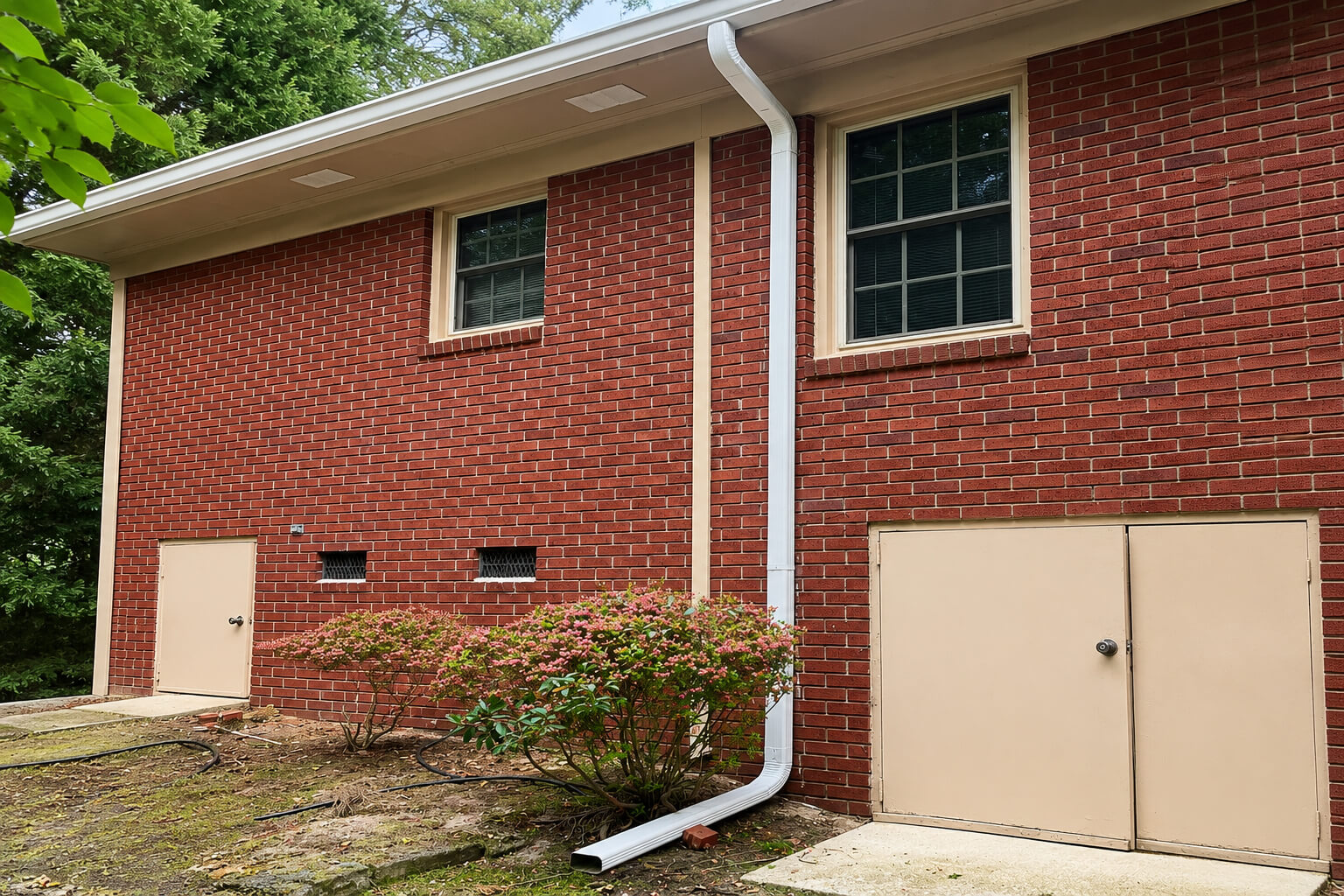
Common Downspout Problems We Repair
Downspout problems can develop from storm damage, debris buildup, loose fasteners, impact, aging materials, or improper drainage. Common issues include leaking seams or connections, loose or detached downspouts, dents and crushed sections, clogs, missing extensions, water overflowing near the downspout connection, and runoff collecting too close to the foundation.
Signs of a downspout problem may include water spilling over the gutters, staining on siding, washed-out landscaping, standing water after rain, or soil erosion near the home. Addressing these issues early can help prevent more extensive water damage.
Downspout Repair vs. Replacement
Not every damaged downspout needs to be completely replaced. Minor problems such as loose connections, separated sections, or localized damage may be repairable when the rest of the system is in good condition.
Replacement may be the better option when a downspout is severely crushed, extensively corroded, repeatedly clogging because of inadequate sizing, or no longer compatible with the gutter system. Additional downspouts may also be recommended when the existing system does not provide enough drainage capacity for the roof.
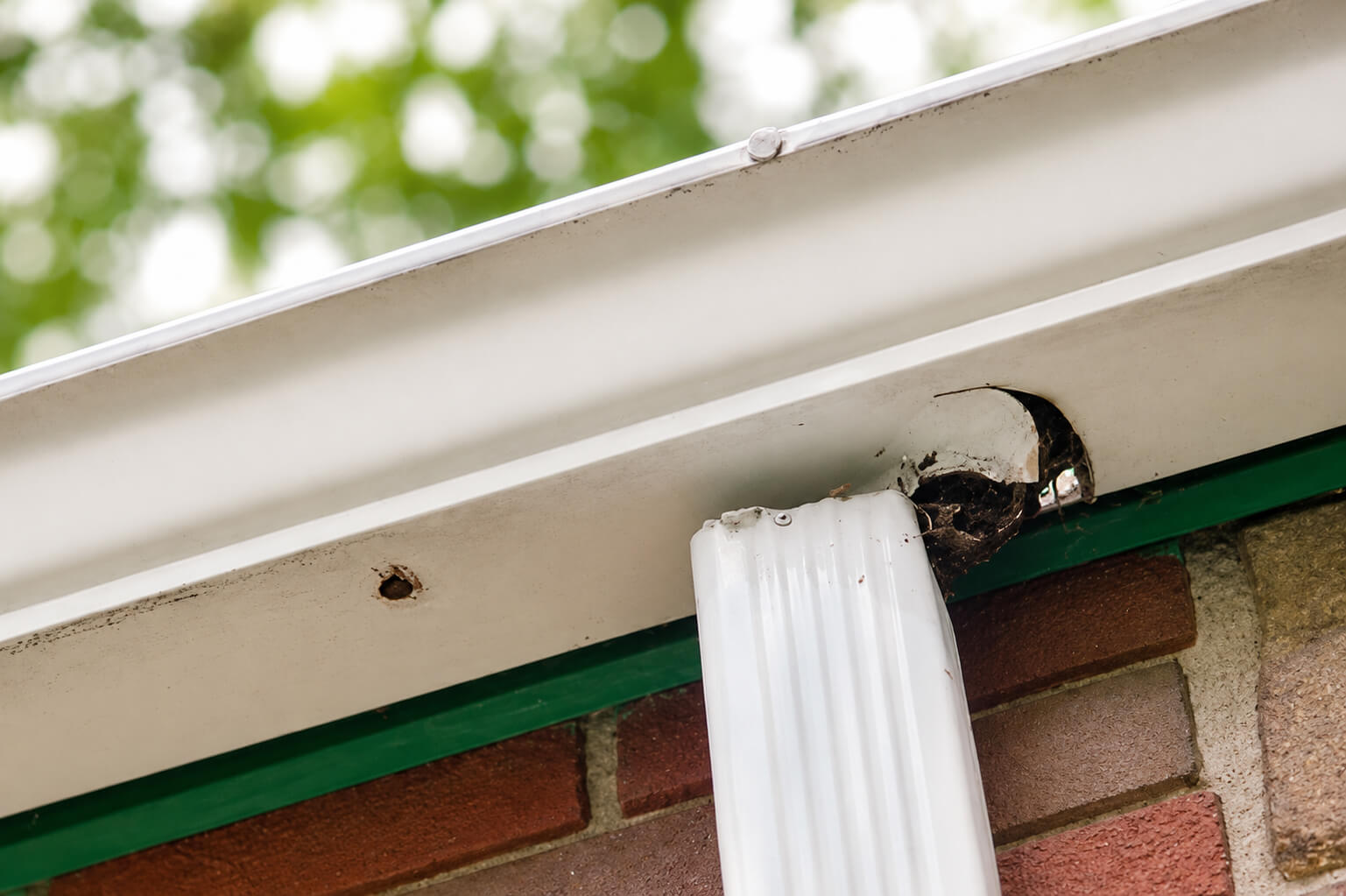
Downspout Materials and Styles
Aluminum is one of the most common materials for residential downspouts because it is lightweight, corrosion-resistant, durable, and available in a variety of colors. Steel provides additional strength but may require protective coatings to help prevent corrosion. Copper downspouts offer exceptional durability and a distinctive architectural appearance for homeowners looking for a premium option.
Downspouts are also available in different sizes and profiles to complement the gutter system and exterior of the home. Choosing the appropriate size is important for both appearance and drainage capacity.
Downspout Maintenance and Clog Prevention
Leaves, pine needles, roof debris, and other materials can collect inside gutters and eventually block downspout openings. Regular gutter and downspout cleaning helps maintain proper water flow and reduces the risk of backups and overflow.
Gutter guards may help reduce the amount of debris entering the system, although periodic inspection and maintenance may still be necessary. Downspout openings, elbows, and extensions should also be checked periodically to ensure water can flow freely and discharge in the intended location.
Frequently Asked Questions
What size downspouts are best for a home?
Common residential downspout sizes include 2×3 inches and 3×4 inches. Larger 3×4-inch downspouts can handle more water and may be less prone to clogging, making them a good option for larger roofs or high-capacity gutter systems.
How far should downspouts extend away from the foundation?
Downspouts should discharge water far enough from the foundation to prevent pooling near the home. The appropriate distance depends on the property’s grading, soil, and drainage conditions. Extensions, splash blocks, or underground drainage may be used when additional water control is needed.
Can a damaged downspout be repaired, or does it need to be replaced?
Minor problems such as loose connections, separated sections, and localized damage can often be repaired. Severely crushed, corroded, undersized, or extensively damaged downspouts may be better candidates for replacement.
Why is water pooling near my downspout?
Water may pool because the downspout ends too close to the foundation, the ground does not slope away from the home, or the extension or drainage system is blocked or inadequate. Redirecting the discharge may help improve drainage.
Can you add downspouts to an existing gutter system?
Yes. Additional downspouts can often be added when an existing gutter system does not drain quickly enough or regularly overflows during heavy rain. The existing gutters should first be evaluated to determine the best location and appropriate downspout size.
Do downspouts need regular maintenance?
Yes. Downspouts should be periodically checked for clogs, loose connections, damage, and proper water discharge. Keeping gutters clear of leaves and debris also helps prevent downspout blockages.
Can downspouts be connected to underground drainage?
Yes, downspouts can often be connected to an appropriate underground drainage system to carry water farther from the home. The underground system must be properly designed and kept clear to prevent backups.
Do you install and repair commercial downspouts?
Yes. Apex Gutter Works provides commercial downspout installation and repair for properties that may require larger downspouts, additional drainage capacity, or heavy-duty materials to manage runoff from larger roof areas.



Contact Us
303 N Salem St. Apex, NC
Phone 919-443-6028
Hours
Monday - Friday: 8:00am - 8:00pm
Saturday: 8:00am - 6:00pm
Sunday- Closed